

IAVCEI Volcandpark 2026 Conference

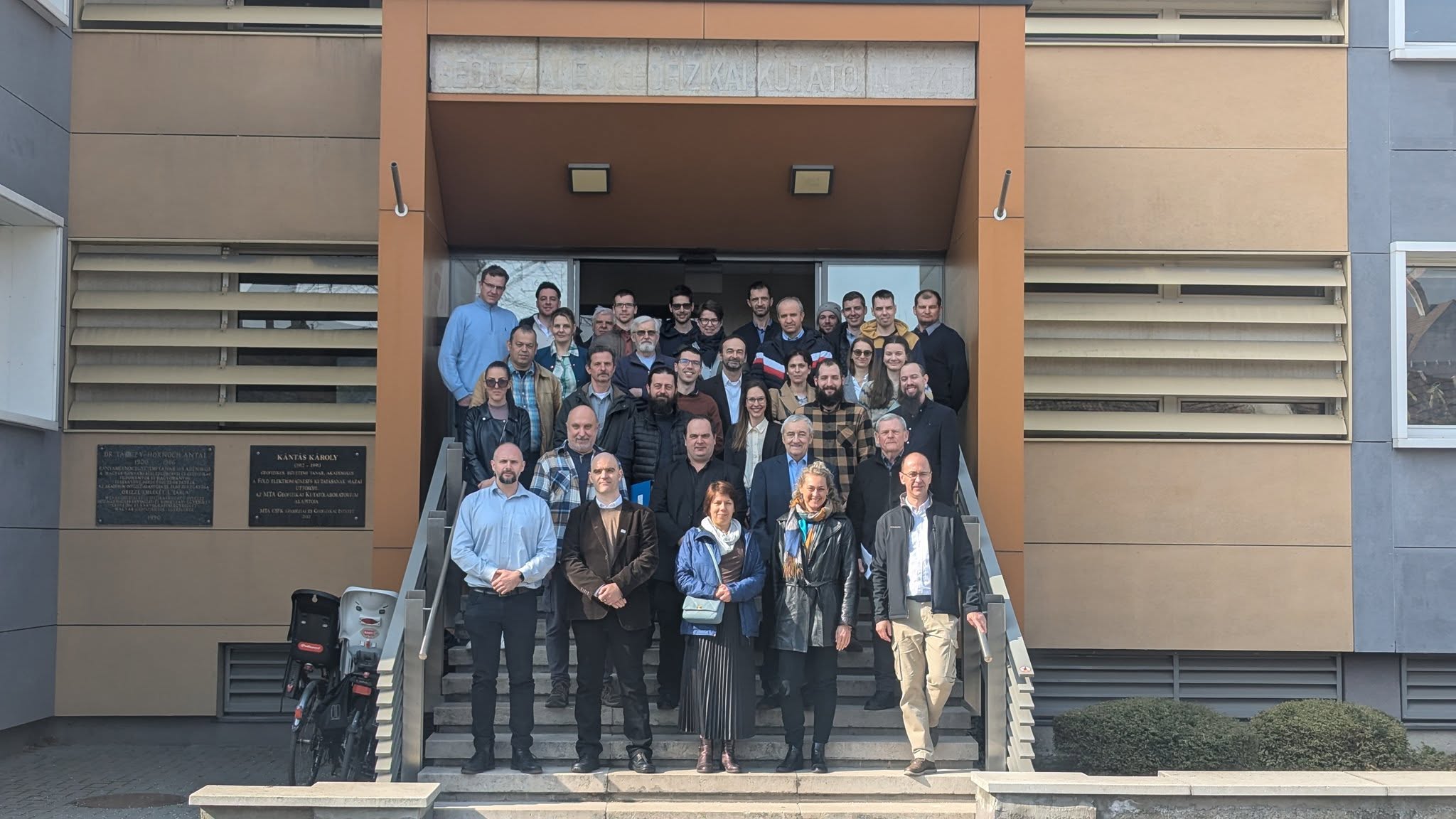
The IAVCEI Volcandpark 2026 Conference was held at HUN-REN Institute of Earth Physics and Space Science in Sopron, Hungary, between 26 and 29 May 2026, as an official event of the IAVCEI Commission on Volcanic Geoheritage and Protected Volcanic Landscapes. The meeting brought together more than 40 researchers, geopark professionals, educators, and geoconservation experts to discuss the scientific, educational, and societal value of volcanic geoheritage. We are very grateful for the support of IAVCEI, which helped strengthen the international visibility and scientific quality of the conference.

The scientific programme included two days of oral presentations, discussions, and networking activities. The sessions covered a wide range of topics, including volcanic geology from a geoheritage perspective, geodiversity assessment, geoconservation of volcanic regions, volcanic geoparks, geoeducation, geotourism, hazard communication, and the relationship between volcanic landscapes and society. The programme also included a roundtable discussion about the future and the possibilities in volcanic geoheritage research, and publication-related opportunities, creating an active and friendly environment for scientific exchange. Keynote speakers of the conference were: Joan Martí, Karen Holmberg, Paraskevi Nomikou, Benjamin Van Wijk de Vries, Maria Fernanda Martínez-Báez Téllez, Gino Gonzalez Ilama. Paula Naomi Irapta received the MDPI Best Paper Award.

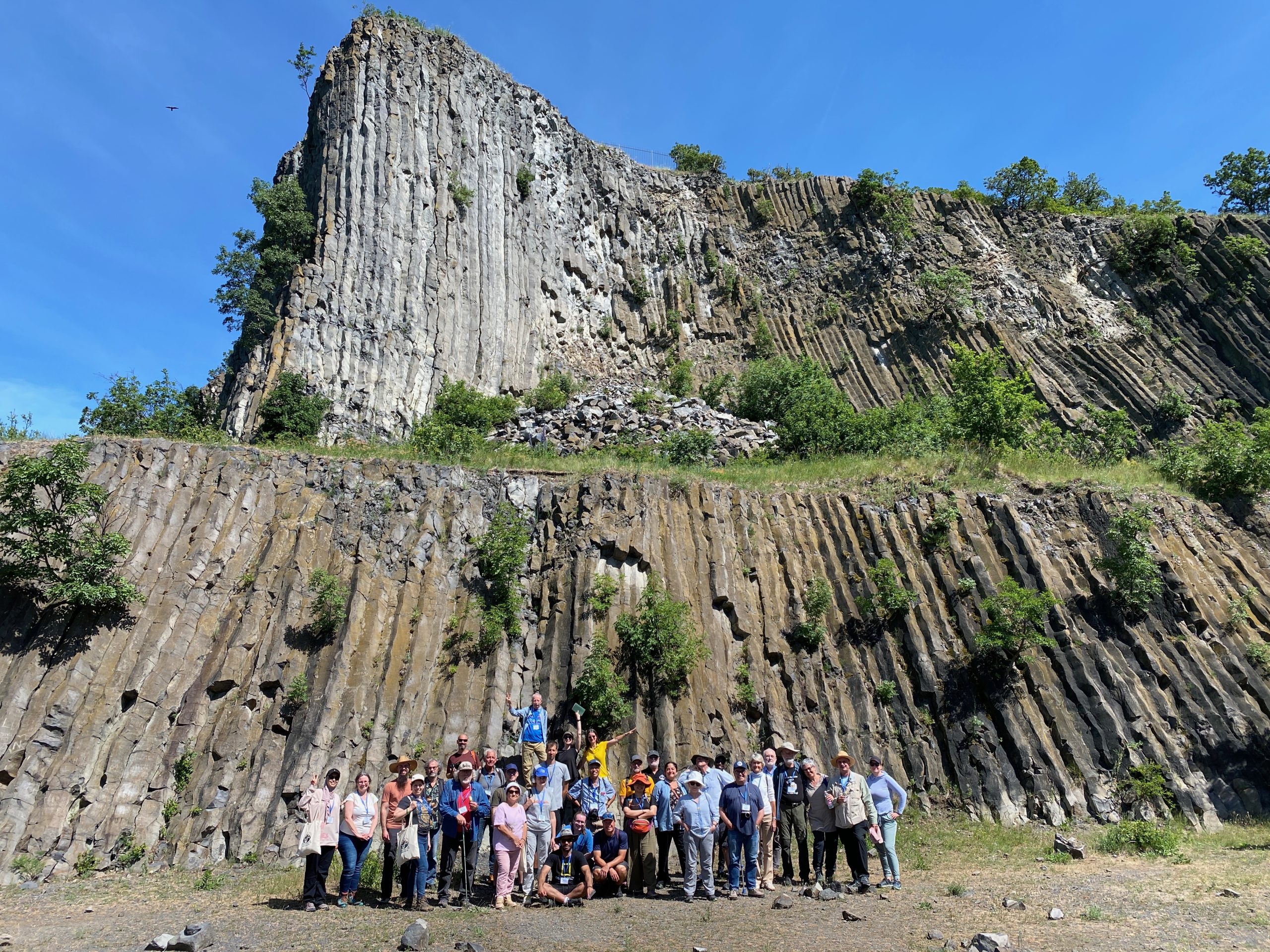
A central element of the conference was the intra-conference field day on 27 May to the Little Hungarian Plain Volcanic Field. Participants visited the Kemenes Volcano House in Celldömölk, an important geotourism centre at the foot of the monogenetic Ság Hill. The visit introduced the volcanism of Hungary and the Carpathian Basin, as well as the geological and educational value of the 5.5-million-year-old Ság Hill basalt volcano. The field programme continued inside the former quarry of Ság Hill, where participants could directly observe the internal structure of a monogenetic volcano and discuss the links between volcanic processes, geosite conservation, and geotourism. The day concluded with the conference gala dinner and volcanic wine tasting at Somló, another iconic eroded volcanic hill.

The post-conference field trip on 29 May focused on the Bakony–Balaton Highland Volcanic Field within the Bakony–Balaton UNESCO Global Geopark. The planned stops included Tihany, Szentbékkálla, Hegyestű, and Szent György Hill, showcasing inverted volcanic landscapes, basalt columns, hydroclastic deposits, mantle xenolith-bearing pyroclastic rocks, volcanic necks, magma–sediment interaction, and maar–diatreme volcanism. These field stops provided an excellent opportunity to connect scientific research with geoconservation, geopark management, geoeducation, and the emerging theme of Deep-Earth Geoheritage.

Overall, Volcandpark 2026 successfully continued the tradition of previous Volcandpark meetings by creating a platform for interdisciplinary discussion on volcanic geoheritage and protected volcanic landscapes. The conference strengthened collaboration between the volcanological, geoheritage, geopark, and geotourism communities, and highlighted Hungary’s volcanic landscapes as valuable natural laboratories for research, education, and public engagement. We sincerely thank IAVCEI for its support and for helping make the meeting a successful international event.

 

Our research group’s impact at the EGU26 conference!

Our group participated in large numbers and in a remarkably diverse range of activities at EGU26 (https://www.egu26.eu/), organized by the European Geosciences Union in Vienna, as tradition dictates, between May 3–8, 2026. This clearly reflects the active and multifaceted work of our group.

Altogether, our group members contributed to EGU26 with 3 session-organizing roles, 2 oral presentations, 2 poster presentations, 1 award, and 1 additional scientific-organizational activity.

We thank all members of our group for their participation and for presenting our results on an international platform. Keep up the great work!

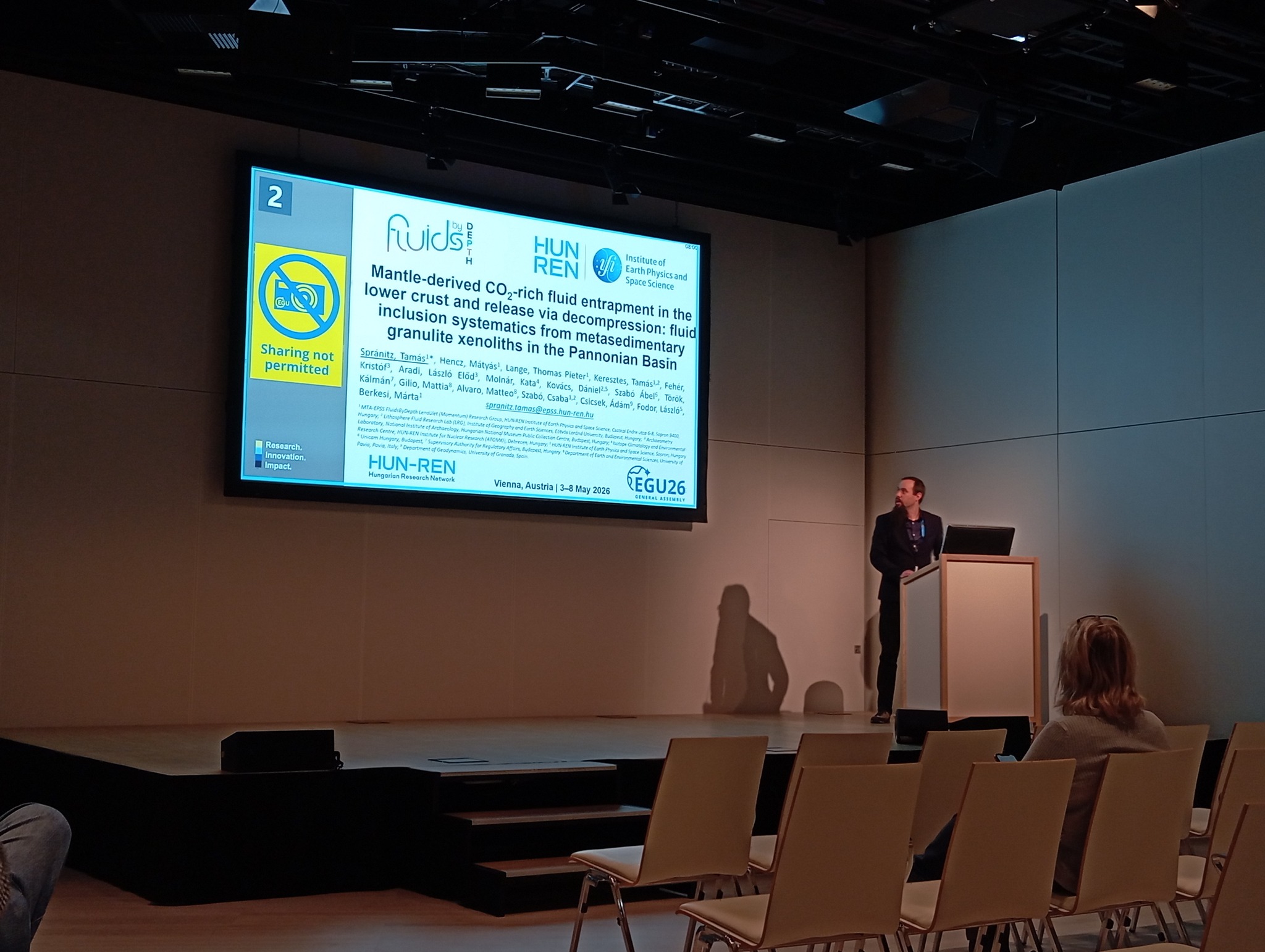
Tamás Spránitz gave a presentation on the research group’s latest fluid inclusion results from lower-crustal rocks and their key implications, entitled “Mantle-derived CO₂-rich fluid entrapment in the lower crust and release via decompression: fluid inclusion systematics from metasedimentary granulite xenoliths in the Pannonian Basin”, in the session “What Makes Earth So Special: Global Cycles of Volatiles”.

In addition to his presentation, Tamás also co-organized a new session dedicated to fluid/melt/crystal inclusion research. The invited speaker of the session, Prof. Bob Bodnar from Virginia Tech, USA, gave a fascinating and highly engaging presentation on fluid inclusion studies of meteorites. The session, entitled “Looking into the unreachable: Inclusions as snapshots into Earth processes, from the Crust to the deep Mantle and beyond”, aims to provide a European platform for the inclusion research community in the coming years, alongside the ECROFI meetings.

Kristóf Porkoláb gave a presentation on one of the research group’s recently published papers (https://www.nature.com/articles/s41598-026-43790-4) in the session “Chemistry, microstructures, and mineral physics: constraining crustal dynamics across scales”. His talk, entitled “Rheological and tectonic consequences of garnet breakdown in the lower crust: a case from the Pannonian Basin”, explored model-based links between lower-crustal instability, lithospheric weakening, and fluid flow.

Kristóf also received the prestigious Flinn-Hart Award of the International Lithosphere Program at EGU, in recognition of his outstanding research activity. We warmly congratulate him once again!

Tibor Rubóczki presented the latest results of geophysical research in the Bakony–Balaton Highland in the “Electromagnetic Induction in Geophysics (EMRP2.3)” session. His poster presentation was entitled “Analysis of Magnetotelluric and Gravity Anomaly Datasets in the Bakony-Balaton Highland Volcanic Field”. Our research combines state-of-the-art 3D gravity anomaly modelling and 3D magnetotelluric inversion methods, contributing to a more detailed understanding of the region’s complex crustal and lithospheric structure, as well as its geological and geochemical characteristics, including possible fluid flow processes.

Eszter Békési presented a poster at EGU on the numerical modelling of deep closed-loop geothermal systems, entitled “The effect of depth, temperature and pressure dependency of rock thermal properties on the performance of deep borehole heat exchangers: example from the Pannonian Basin”, in the session “Geothermal Systems in the Urban Energy Transition: Scientific, Engineering, and Integration Perspectives”. She was also active at the conference as co-organizer of the session “Soft rocks and Brittle rocks: comparison of geomechanics and insights for the Energy Transition”.

Márta Berkesi served as a session co-organizer for the third time in the session “Solving geoscience problems using mineralogy and minerals’ inclusions”. In addition, as a member of the Council of the European Association of Geochemistry (EAG), Márta organized an event for students and early-career researchers at the EAG booth, where she presented the EAG’s support activities and funding opportunities for students and postdoctoral researchers, and also welcomed ideas from visitors.

Grant supported by the Austrian-Hungarian Action Foundation

We warmly congratulate Tamás Spránitz, a key member of our research group, who, as project leader, has been awarded funding of approximately HUF 4.3 million through the support of the Austrian-Hungarian Action Foundation, in collaboration with researchers from Montanuniversität Leoben.

http://omaa.hu/hu/geforderte-projekte-berichte/

The aim of the project is to investigate past fluid flow processes in the Austroalpine and Penninic metamorphic units located along the eastern margin of the Eastern Alps, in the region of the Austrian–Hungarian border. Following systematic field sampling, representative samples will be studied using fluid inclusion analyses, including microthermometry and Raman spectroscopy, in order to reconstruct ancient fluid flow along shear zones and its pressure–temperature conditions.

The results will contribute to the assessment of the region’s natural hydrogen potential and provide new insights into fluid migration processes in the Earth’s crust, as well as their role in geoenergy applications.

International instensive Raman course in the USA

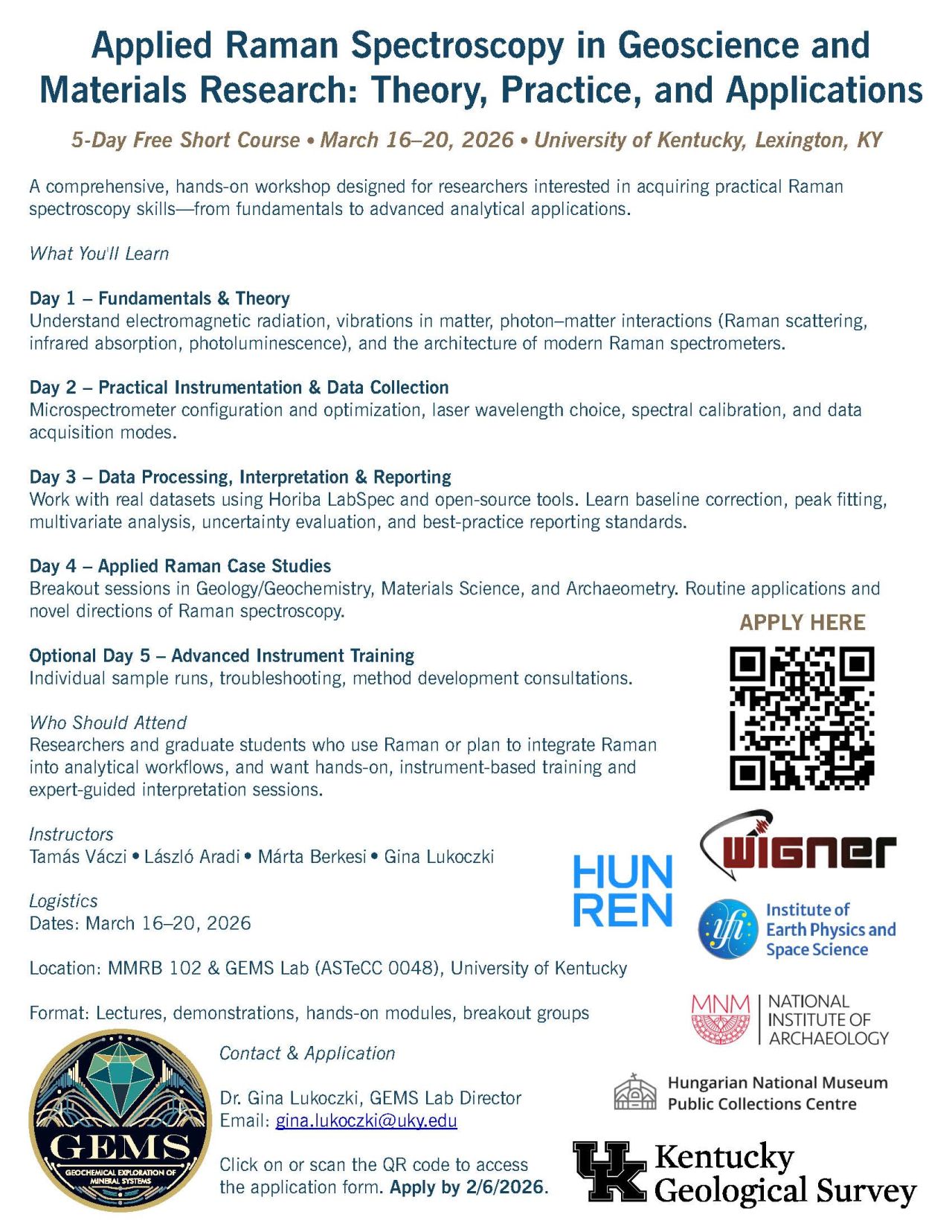
The leader of our research group, Márta Berkesi, together with Tamás Váczi and László Aradi, participated as lecturers in the international five-day intensive course Applied Raman Spectroscopy in Geoscience and Materials Research: Theory, Practice, and Applications, held on March 16–20, 2026, on the campus of the University of Kentucky in Lexington, USA.

This prestigious professional program offered comprehensive, practice-oriented training for researchers and PhD students, covering topics from the theoretical foundations of Raman spectroscopy to the most advanced applications in geoscience and materials research. Participants had the opportunity to deepen their knowledge using real measurement data in a modern instrumental environment.

We are especially pleased that researchers from Hungarian institutions actively contributed to the professional success of the course and represented Hungarian geoscience on the international stage.

We are grateful to the University of Kentucky for its support through the UKinSPIRE program, and to Gina Lukoczki for the invitation!

Natural Hydrogen meeting in Sopron

The visit of the Hungarian Hydrogen and Fuel Cell Association (MHTE) to Sopron was made possible through the organization of our research group members Eszter Békési, Márta Berkesi, and Tamás Spránitz.

The event focused on natural hydrogen research and the opportunities it offers.

We are grateful to the representatives of the research, innovation, industrial, and policy-making sectors for their participation!

Hosting Manfredo Capriolo and Simon Schorn

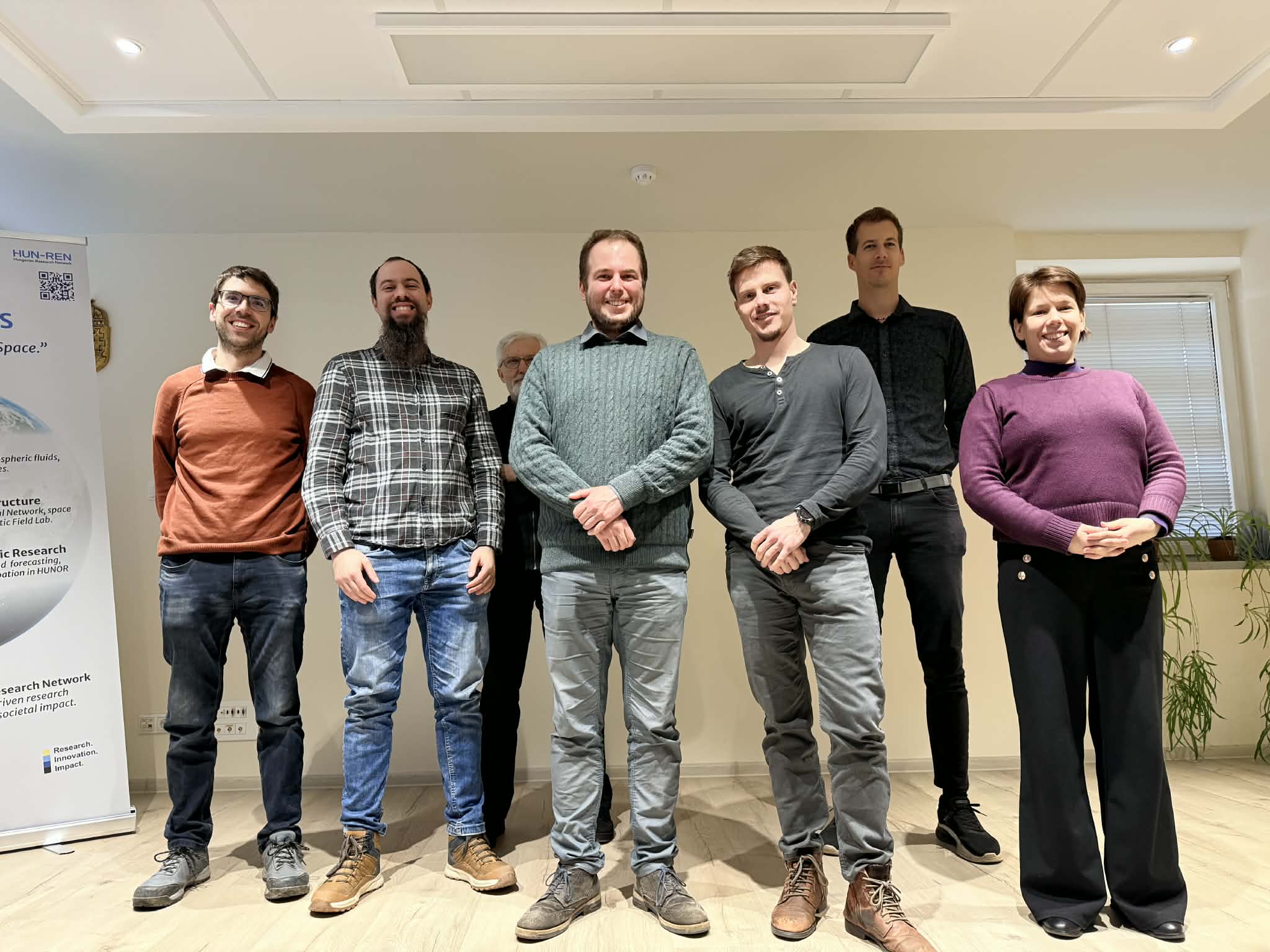
On February 16, our research group had the pleasure of hosting two outstanding postdoctoral researchers, Manfredo Capriolo from the University of Birmingham, United Kingdom, and Simon Schorn from Johannes Gutenberg University Mainz, Germany, at the Sopron headquarters of the HUN-REN Institute of Earth Physics and Space Science.

Our invited speakers addressed highly topical issues, including the carbon cycle, geological CO₂ fluxes, latent heat release, and modelling during metamorphic reactions.

During a focused consultation held the following day, we outlined potential directions for future collaboration with both colleagues, looking forward to successful joint research.

The seminar was supported by the Lendület Research Group and the Research Grant Hungary RGH_L 151351.

Presentation at Goethe University

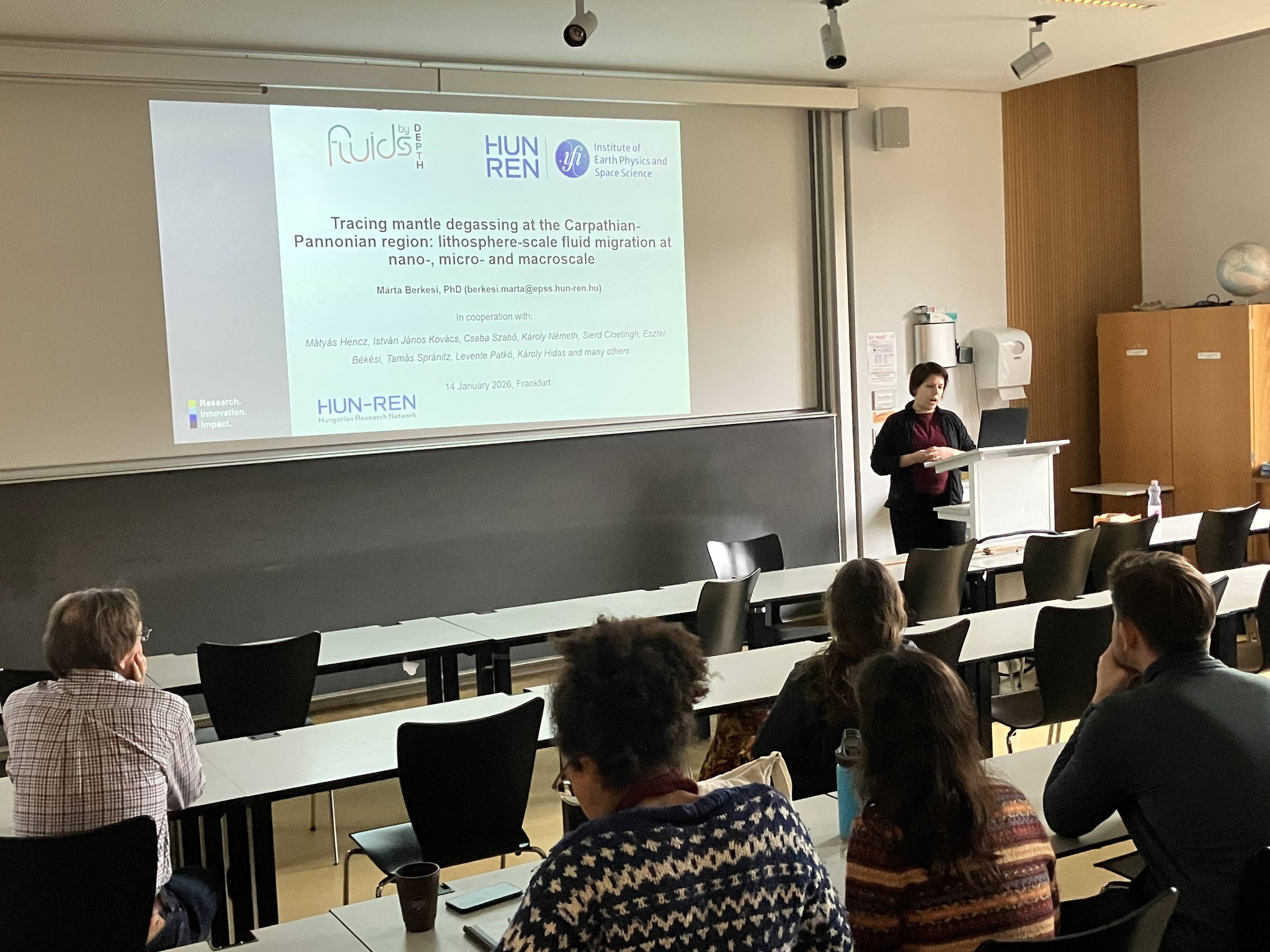
Márta Berkesi accepted an invitation from Goethe University Frankfurt, Germany, where she gave a presentation at the Institute of Geosciences on the research group’s latest results, focusing on mantle degassing research and modelling in the Pannonian Basin.

We are grateful to Sonja Aulbach, an outstanding figure in mantle research, for this honouring opportunity, and to all participants for the engaging discussion!

Márta Berkesi has been elected to the EAG Council

We are pleased to announce that Márta Berkesi, head of our research group and member of the HUN-REN Institute of Earth Physics and Space Science, has been elected to the prestigious European Association of Geochemistry (EAG) Council, where she will be the sole Hungarian researcher representing the domestic geochemistry community. Council members are elected directly by EAG members for a three-year term; they participate in council discussions, decision-making, and initiatives, including the largest international geochemistry meeting, the Goldschmidt Conference.