

Field work in South Spain

Three members of our Lendület Research Group — Márta Berkesi, Ákos Kővágó and Tamás Spránitz — spent the past two weeks in southern Spain as part of a Hungarian–Spanish collaboration, contributing to the H2RISE research project (Natural hydrogen and underground storage in rift-inversion systems).

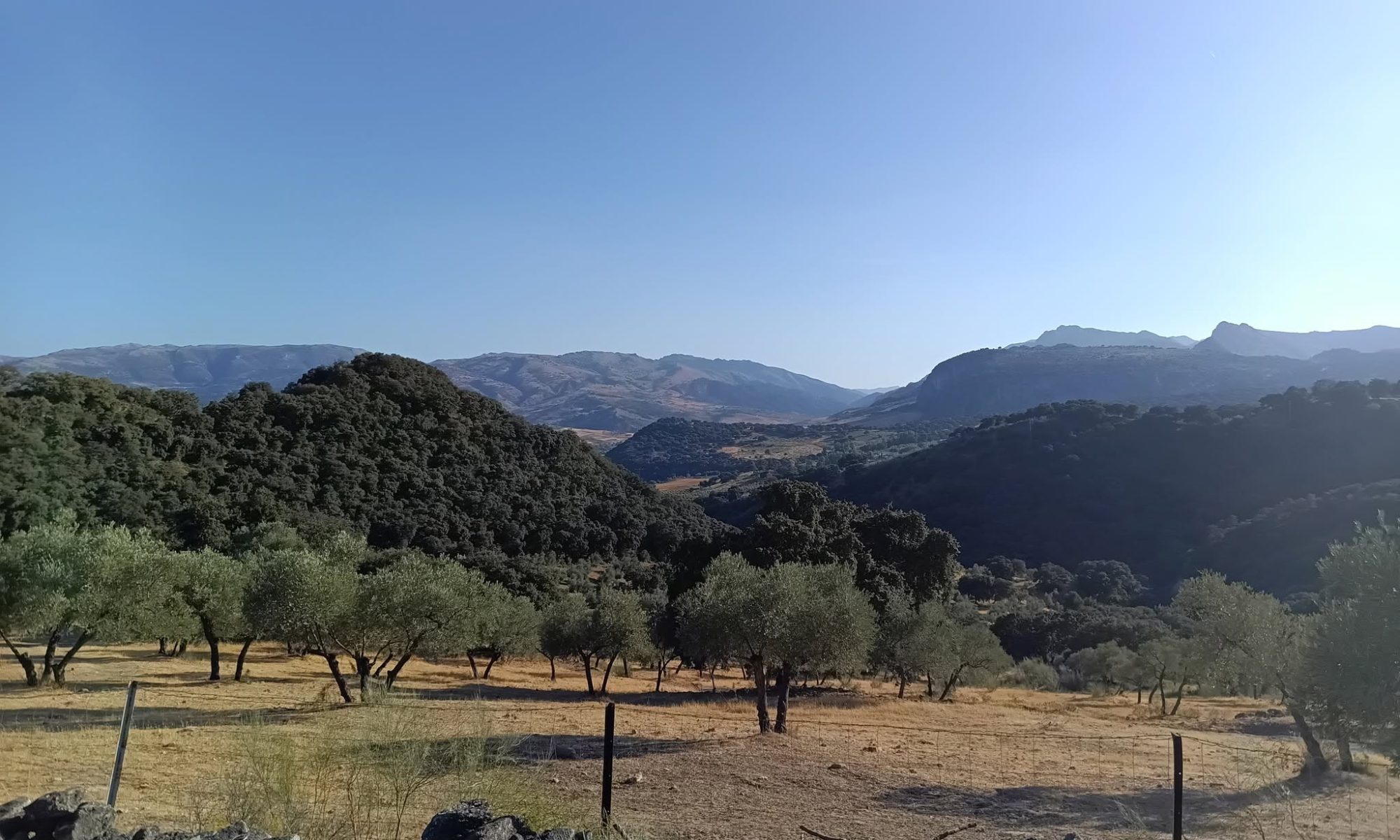
The aim was once again to investigate fluid-flow systems, but this time the focus was not on CO2, but on the formation and migration pathways of H2. The research took place in the Ronda peridotites, the world’s largest exposed subcontinental upper-mantle complex. In addition to its spectacular scenery, the Ronda massif provides a unique opportunity to study the deeper layers of the continental lithosphere and to gain insight into the generation of geological hydrogen through peridotite–water interaction.

Together with colleagues from the Instituto Geológico y Minero de España (Geological and Mining Institute of Spain), members of our research group contributed to the collection of rock, spring-water and gas samples. We hope that the selected rock samples will also provide opportunities for fluid inclusion studies. The success of the fieldwork is reflected in the large number of samples collected.

This collaboration is, of course, only just beginning, and we look forward to sharing further developments in the future.
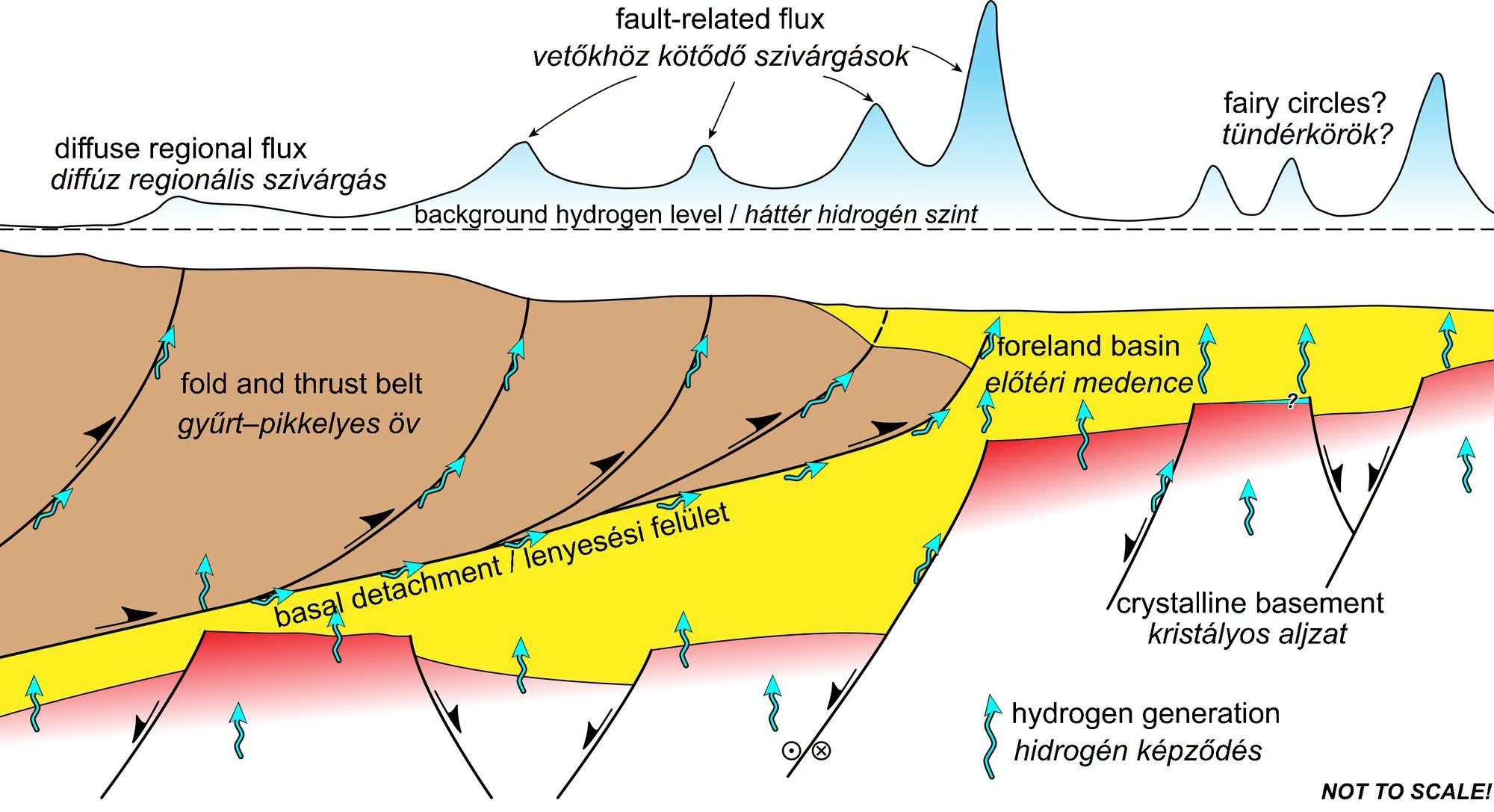

New publication!

Led by our research group member Eszter Békési, and co-authored by Kristóf Porkoláb, Tamás Spránitz and Márta Berkesi, a new review article has been published in Hungarian in the journal Földtani Közlöny. This time, the focus is not on CO2, but on natural hydrogen.

Invited lecture and visit at Montanuniversität Leoben, Austria

Representing the work of our research group, Tamás Spránitz gave an invited lecture at Montanuniversität Leoben (https://www.unileoben.ac.at/) on 22 June 2026 as part of the university’s Geosciences Seminar series.

The approximately 50-minute presentation introduced new scientific results and analytical approaches related to fluids involved in metamorphic processes across different geodynamic settings. The lecture attracted considerable interest and was followed by a lively professional discussion.

Title of the lecture:
The role of metamorphic (CH4-N2-CO2-H2-H2O) fluids from an inclusion perspective: new results and methods to better understand subduction zone fluid processes, mantle degassing and retrograde subsurface fluid migrations

The visit also provided an excellent opportunity to strengthen our existing scientific collaboration, which may be further developed through joint research projects, including the Austrian-Hungarian Action Foundation project starting in August 2026.

We are grateful for the kind invitation!

Successful Mecenatúra grant applications

Congratulations to our colleague and research group member, Mátyás Hencz, who has been successful with two proposals submitted to the Scientific Patronage Programme (MEC_26):

✅ Foreign conference participation (MEC_R_26), and
✅ Organisation of an international conference in Hungary (MEC_SZ_26).

Under the foreign conference participation scheme, the MEC_26 programme will support the presentation of our research results, published earlier this year in the prestigious journal Global and Planetary Change (https://www.sciencedirect.com/…/pii/S0921818126000986…), at the AGU26 Annual Meeting (https://www.agu.org/annual-meeting).

Under the programme supporting the organisation of international conferences in Hungary, MEC_26 contributed to the successful organisation of the IAVCEI Volcandpark 2026 conference (https://volcandpark2026.epss.hu/). A report on the conference will be coming soon!

❗️We warmly congratulate Mátyás on this fantastic achievement!

List of projects supported under MEC_26

New publication!

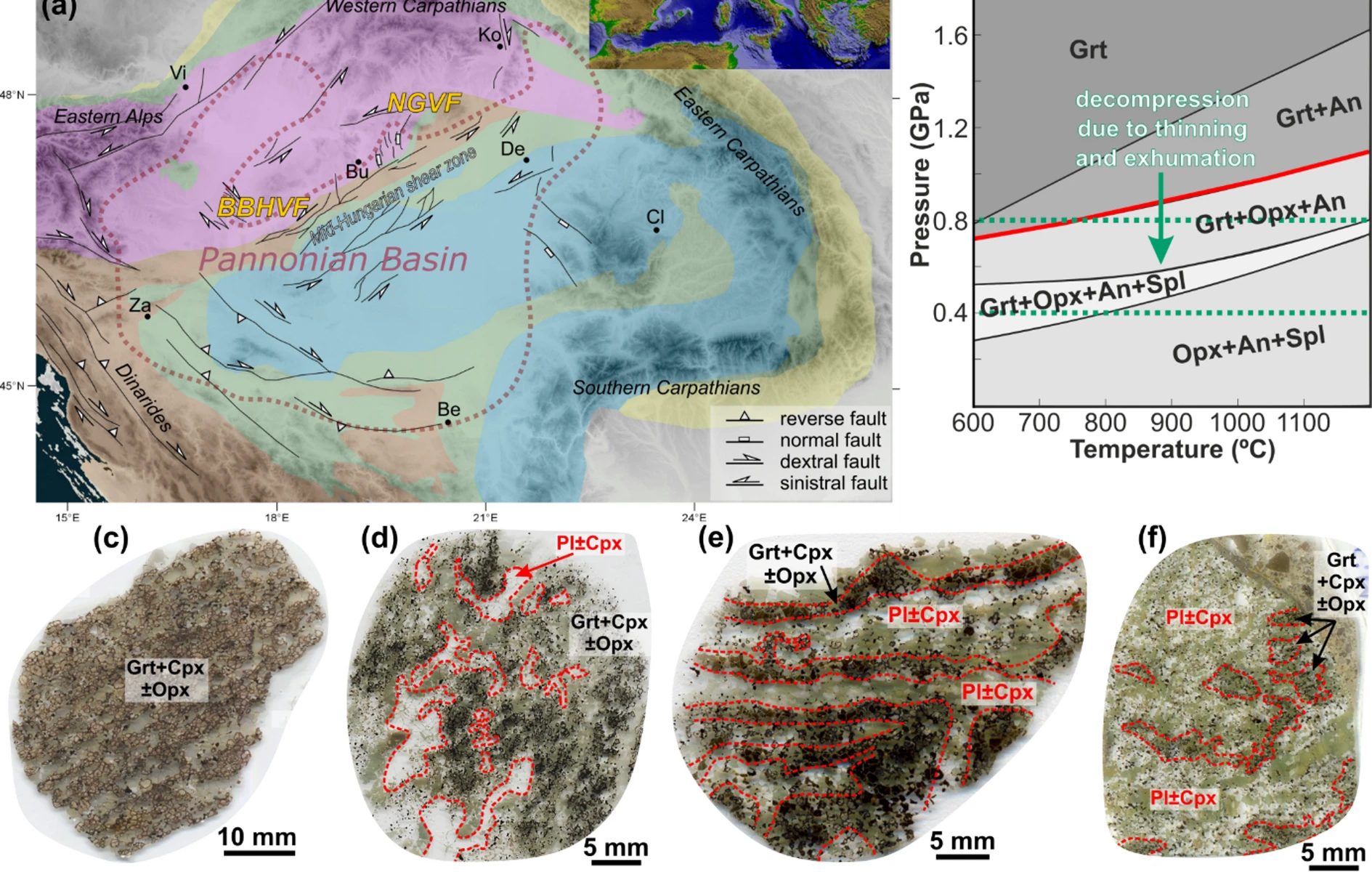
How do petrological transformations and fluid–rock interactions affect deformation in the lower crust and, consequently, large-scale tectonic processes?

To address this question, members of our research group studied rock samples originating from the lower crust beneath the Pannonian Basin and carried out numerical simulations. The results indicate that the breakdown of strong garnet minerals may contribute to maintaining the lower crust in a weak and easily deformable state. This process may have played a role in the development of the present-day structure of the Pannonian Basin and may also influence the style of currently active tectonic deformation and the pathways of fluid flow.

Further details can be found in our publication in Scientific Reports, a journal of the Nature Portfolio:

Kristóf Porkoláb, Kálmán Török, Tamás Spránitz, István János Kovács, Eszter Békési, Márta Berkesi

Large-scale rheological and tectonic effects of localized garnet breakdown: a case from the Pannonian Basin

Scientific Reports,

DOI: https://doi.org/10.1038/s41598-026-43790-4

https://epss.hun-ren.hu/research/legujabb-publikaciok/?title=Large-scale%20rheological%20and%20tectonic%20effects%20of%20localized%20garnet%20breakdown:%20a%20case%20from%20the%20Pannonian%20Basin